Corrugated Machines and Ancillary Machines
Why Choose Us
Rich experience
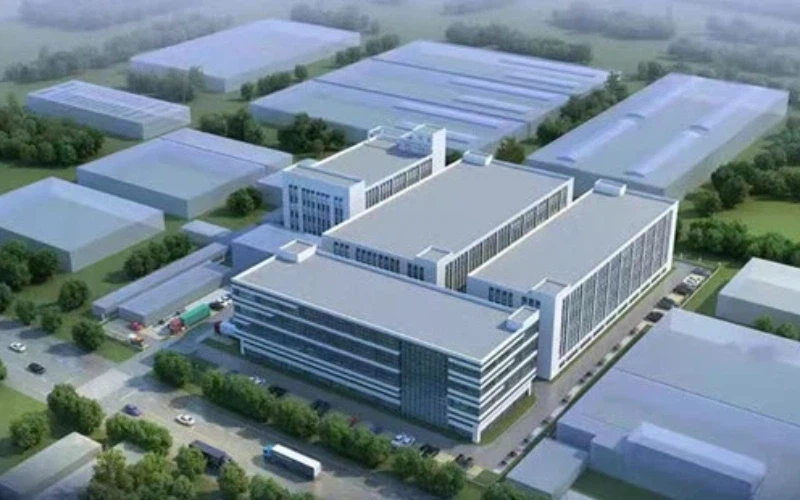
Aydly Intelligent Packaging Machinery (Guangdong) Co., Ltd. is one of the subsidiary of A.S.I. Group (American Sunflower International Group Co., Ltd.) headquartered in New York USA, Singapore and Hong Kong, China.
One-stop solution
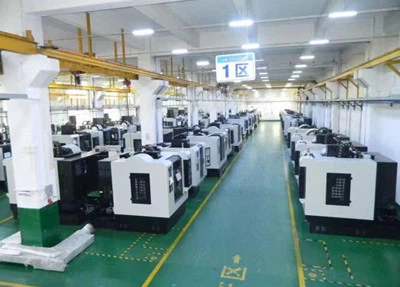
We integrate technology research and development, manufacturing and processing, assembly, sales, export, installation and after-sales service, etc. We commit to provide a full range of solutions to the global customers of paper and paperboards related with industries of manufacturing, printing and packaging.
High quality
We specialize in carton box printing and packaging machines, corrugated paperboard production lines, laminating machines, flat bed die cutting and creasing machines, EPC with paper making machines, etc.
High quality service
Our sales staff visit the customers' plants and discuss requirements, online communication, answer questions and solve difficulties. Technicians on-site installation, regular factory tour to check the machines running and maintenance, repair and fix, global express delivery for the ordered parts, etc.
What Is a Corrugator Machine
A corrugator machine is a large machine composed of a series of smaller machines that combine two different kinds of paper to create cut sheets of corrugated fiberboard. The flat, facing sheets are referred to as liners, while the wave-like, fluted layers are known as the corrugating medium, or simply the medium. The corrugator machine takes large rolls of paper produced on paper machines, flutes the medium, and glues it to the liners, one at a time. It then delivers stacked, cut, and scored sheets of corrugated board to various converting machines. These converting machines turn the sheets of corrugated board into "box blanks," which are ready to be made into boxes and other corrugated board products.
The corrugator combines rolls of linerboard and medium into sheets of corrugated board. A typical corrugator is equipped to run both single-wall and double-wall configurations in a variety of flute heights. Modern machines can also be equipped with innovative enhancements that offer a range of value-added features such as functional coatings, color coatings, tear tape or internal strings, and water-resistant adhesives. Advanced technology, such as razor cutting knives and robotic scoring heads, allows the machine to produce high-quality board with faster setups and shorter cutoffs.
-
 Automatic Finished Product Packaging LineAydly automatic finished product packaging line is an automated packaging system that is connectedAdd to Inquiry
 -
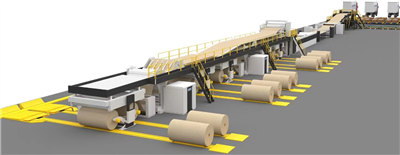 Paper Roll Handling SystemAydly Paper roll handling systems are designed for maximum life cycles and optimized energyAdd to Inquiry
 -
 Cassette Type Single FacerThe corrugated roller and pressure roller are loaded with pneumatic control, which has a cushioningAdd to Inquiry
 -
 5 Ply Corrugated Cardboard Production LinesFirst transfer parts vacuum adsorption feeding, three group carbon fiber pressing parts to pressAdd to Inquiry
 -
 5 Ply Corrugated Cardboard Production LinesThe 5 Ply Corrugated Cardboard Production Line is used to complete the paper clamping, loosening,Add to Inquiry
 -
 7 Ply Corrugated Cardboard Production LinesSymmetrical structure, can install two bundles of paper tube, can work continuously; Use hydraulicAdd to Inquiry
 -
 2200 Corrugator Cardboard LinesThe 2200 Corrugator Line is used to complete the paper clamping, loosening, disassembling medium,Add to Inquiry
 -
 2500 Corrugator Cardboard Production LinesThis 2500 Corrugator Line consists of hydraulic shaft less grinding roller frame, automatic spliceAdd to Inquiry
 -
 2800 Corrugated Cardboard Production LinesThe quality of paper is measured up above the standard of NATIONAL STANDARD B GRADE OF CHINA.Add to Inquiry


- Aydly Intelligent Packaging Machinery (Guangdong) Co., Ltd.
- Tel: +86-20-84885226
- Fax: +86-20-34714772
- Cell/WeChat: +86-13808819567
- Email: ai88pack@gmail.com AlPackMachine@163.com AYDLY_PACK@163.COM
- Add: No.15 Fuhua Road, Zhongcun, Panyu District, Guangzhou, China.
Corrugated boxes are an important part of everyday life. They provide an easy-to-use and renewable packaging resource for almost any product. Corrugated cardboard is something you see every day. Corrugated cardboard containers are widely used in the packaging of both industrial and consumer products.
The demand for corrugated boxes is strong, and their packaging is cost-effective. Main products include cosmetics, soap, auto parts, pottery, glassware, medicine, biscuits, and more. The corrugated box industry plays a crucial role in manufacturing within our economy, affecting everything from food to refrigerators.
Because corrugated boxes cannot be transported economically over long distances, carton factories are often located near production sites. To produce these boxes, a corrugated box-making machine must be equipped with high-quality corrugating equipment and properly maintained.

What Are the Benefits of a Corrugated Machine
If you're in the business of shipping products, you know that corrugated boxes are an essential part of your operations. A corrugated machine can help you create custom corrugated boxes quickly. Here are just a few benefits of using a corrugated machine in your business:
Improved Efficiency
Improved Efficiency
A corrugated machine can help you create cartons quickly and efficiently without sacrificing quality. This means you can get your product out faster and with less hassle.
Enhanced Quality
When you use a corrugated machine, you will be able to produce strong and durable boxes. This means your product will be better protected during transit and will arrive in better condition.
Customization Options
Using a corrugated cardboard-making machine provides many customization options. You can choose the size, shape, and color of your corrugated boxes, ensuring they are the perfect match for your brand and product line.
Cost-Effective
Corrugated box-making machines are a cost-effective way to produce custom corrugated boxes. You don't have to outsource your box-making needs; you can create just the boxes you need in-house.
Corrugator Machine: Corrugated Cardboard Manufacturing Process


The raw materials for corrugated cardboard are specific grades of paper known as linerboard and corrugating medium (or fluting medium). Linerboard forms the surface of the corrugated cardboard and has strong tear resistance and strength. The corrugating or fluting medium is paper that is corrugated in the single facer; after corrugating, it has increased folding and compression strength. Two sheets of linerboard and one sheet of corrugating medium can be combined to make 3-ply corrugated cardboard, with adhesive applied to the tips of the corrugated flutes. The adhesive is typically made from starch, most commonly maize.
The corrugator machine, also known as the corrugated cardboard production line, is a set of machines arranged in a line that can handle three, five, or seven sheets of paper to produce single, double, or triple-wall cardboard. The corrugated cardboard manufacturing process can be achieved continuously.
The reels of paper are fed into the single facer and conditioned with steam heat. The corrugating medium is formed into flutes between the corrugating rollers in the single facer. Next, starch is applied to the tips of the flutes, and the inner liner is glued to them. The corrugated medium and liner then exit the single facer together, forming what is known as the single face web. After leaving the single facer, the single face web enters the double facer, where it meets the outer liner and forms 3-ply corrugated cardboard. After the double facer, the cardboard goes through the slitter scorer and cutting-off machine and is stacked at the end.
We have developed an advanced single facer with two pairs of corrugated rollers for different flutes, which can change the flute type without stopping the machine. This changeover takes 15-30 seconds, and production can resume within 2-3 minutes.
★Single Facer:
The single facer is a machine that converts craft paper into 2-ply corrugated board. There are two types of single facer machines used in the corrugation industry:
Finger type single facer
Fingerless type single facer
★Both types of machines have different characteristics and specifications
●Finger Type Single Facer: In a finger type corrugation machine, the flute paper is guided by brass adaptors. Due to the slots in the glue applicator roll, there is no gum application in a gap of 3 mm at every 50 mm interval. Finger type corrugation machines are available in different sizes, from 32 inches to 80 inches. The size of the machine depends on the box type and size.
●Fingerless Corrugation Machine: In a fingerless corrugation machine, the fluted paper is guided by suction. Thus, there are no slots in the gum applicator roll, so the gum applicator roll applies gum continuously and uniformly from one end to the other. Fingerless corrugation machines can have different sizes according to the size of the corrugated board.
★Advantages of Fingerless Corrugation Machines
●No Adaptor Marks on the Board: Since there are no brass adaptors in fingerless machines, there are no brass adaptor marks on the board.
●Increased Compression Strength of the Board: With a fixed flute height and fixed radius, the compression strength of the board increases in fingerless corrugation machines.
●Increased BF (Bursting Factor) of the Board: Due to the increased compression strength, the BF of the board also increases.

Common Functions of Corrugated Machines
Control Panel
Pneumatic and electric control buttons, along with an indicator panel, are operated from a control panel and are easy to use.
Adjustable Adhesive Chink
The adhesive chink is adjusted and displayed via a motorized system, allowing precise control of the upper glue amount.
Glue Roll Stop Function
The glue roll has a stopping function to prevent glue from drying up and sticking to the roll, which can cause flute misalignment and increased paper waste.
Chrome-Plated Components
The pressure roll, glue roll, and cool-glue roll are finished with chrome plating.
Motorized Adhesive Pan Dam
The adhesive pan dam is motorized for width adjustment during use.
Glue Circulation System
Glue circulation prevents drying and viscosity changes that could affect adhesion.
Fingerless Single Facer
Designed for lightweight and flexible production, suitable for producing light products.
Applications of Corrugated Machines in Different Industries
Corrugated machines are essential equipment in the manufacturing process of corrugated cardboard, a versatile and widely used packaging material. These machines play a crucial role in shaping the corrugated board's structure, strength, and overall quality, catering to diverse applications across multiple industries.
Packaging
The primary application of corrugated machines is in the production of corrugated cardboard packaging. This type of packaging is renowned for its strength, durability, and cost-effectiveness, making it ideal for a wide range of products, including food and beverages, electronics, furniture, and machinery. Corrugated cardboard boxes provide ample protection during transportation and storage, minimizing damage and preserving product integrity.
Building and Construction
Corrugated board also has significant applications in the building and construction industry. It is used as a lightweight and insulating material in wall panels, roofing systems, and temporary structures. Its ability to withstand humidity and temperature variations makes it suitable for use in various climate conditions. Additionally, corrugated board is commonly employed as protective packaging for building materials, such as drywall, tiles, and flooring.
Agriculture
Corrugated board finds extensive use in the agricultural sector. It is employed as packaging for produce, such as fruits and vegetables, providing protection during transportation and extending shelf life. Corrugated boxes are also utilized in greenhouse applications to regulate temperature and humidity, promoting optimal plant growth. Additionally, corrugated board is used as a barrier to prevent growth and suppress soil erosion.
Medical and Pharmaceutical
In the medical and pharmaceutical industries, corrugated board serves as a protective packaging solution for sensitive equipment, medical supplies, and pharmaceuticals. Its ability to maintain a sterile environment is essential for preventing contamination and ensuring product integrity. Additionally, corrugated board is used in the manufacturing of disposable medical supplies, such as gowns, drapes, and bandages.
Automotive
The automotive industry utilizes corrugated board for the packaging and protection of automotive parts and components. The durable nature of corrugated cardboard ensures that parts are safeguarded during transportation and handling. It is also used as a cushioning material to prevent damage from vibration and impact. Additionally, corrugated board is employed in the production of temporary displays and signage for automotive showrooms.
Aydly Intelligent Packaging Machinery (Guangdong) Co., Ltd. is one of the subsidiary of A.S.I. Group (American Sunflower International Group Co., Ltd.) headquartered in New York USA, Singapore and Hong Kong, China. We specialize in carton box printing and packaging machines, corrugated paperboard production lines, laminating machines, flat bed die cutting and creasing machines, EPC with paper making machines, etc.
We integrate technology research and development, manufacturing and processing, assembly, sales, export, installation and after-sales service, etc. We commit to provide a full range of solutions to the global customers of paper and paperboards related with industries of manufacturing, printing and packaging.




Products Equipments
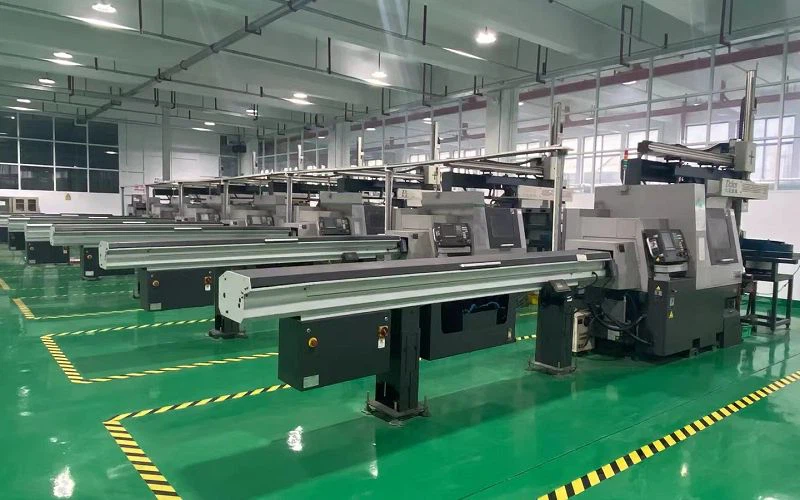
Our machines are used in paper mills, corrugated paperboard factories, carton box makers, printing and packaging factories, etc.