EPC of Paper Chain
Why Choose Us
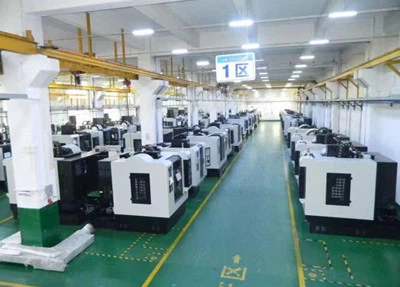
Rich experience
Aydly Intelligent Packaging Machinery (Guangdong) Co., Ltd. is one of the subsidiary of A.S.I. Group (American Sunflower International Group Co., Ltd.) headquartered in New York USA, Singapore and Hong Kong, China.
One-stop solution
We integrate technology research and development, manufacturing and processing, assembly, sales, export, installation and after-sales service, etc. We commit to provide a full range of solutions to the global customers of paper and paperboards related with industries of manufacturing, printing and packaging.
High quality
We specialize in carton box printing and packaging machines, corrugated paperboard production lines, laminating machines, flat bed die cutting and creasing machines, EPC with paper making machines, etc.
High quality service
Our sales staff visit the customers' plants and discuss requirements, online communication, answer questions and solve difficulties. Technicians on-site installation, regular factory tour to check the machines running and maintenance, repair and fix, global express delivery for the ordered parts, etc.
What Are the Products of EPC Of Paper Chain
Medium Paper Machine
Kraft Paper Machine
Machine for Making Filter Paper
Machine for Making Dust Free Paper
Sandpaper Packing Wrapping and Boxing Machine
Machine for Making Carbon Paper
Machine for Making Wet Towel Paper
Machine for Making Sanitary Towels
Machine for Making Diapers
Corrugated Paper Machine
-
 Paper Cutters Machine3 inches sliding friction air shaft to ensure stable rewinding tension; Air control full widthAdd to Inquiry
 -
 Machine for Pressure PaperWe are professional company to offer EPC and supply with the Machines For Pressure Paper.Add to Inquiry
 -
 Machine for Making Filter PaperThe Machines For Making Filter Paper can be controlled freely in a certain range through theAdd to Inquiry
 -
 Machine for Making Dust Free PaperThis machine is specially designed for V-groove, used for industrial cardboard, grey cardboard, MDFAdd to Inquiry
 -
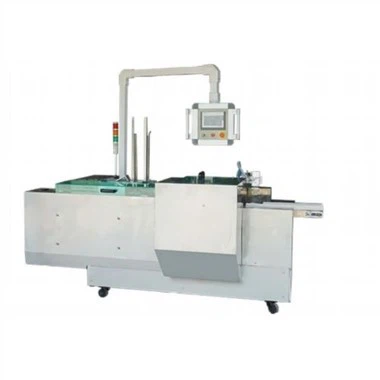 Sandpaper Packing Wrapping and Boxing MachineOur Sandpaper Packing Machine is suitable for three pages, five pages of sandpaper packaging. TheAdd to Inquiry
 -
 Machine for Making Carbon PaperThe Machines For Making Carbon Paper is divided into different grades, such as waste paper, oldAdd to Inquiry
 -
 Machine for Making Wet Towel PaperMachines For Making Wet Towel Paper’s Designed according to the world's advanced paper andAdd to Inquiry
 -
 Machine for Making Sanitary TowelsMachines For Making Sanitary Towels includes main machine, glue applicatos, packing system andAdd to Inquiry
 -
 Machine for Making DiapersMachines For Making Diapers includes host machine, glue machine, packaging system and otherAdd to Inquiry


- Aydly Intelligent Packaging Machinery (Guangdong) Co., Ltd.
- Tel: +86-20-84885226
- Fax: +86-20-34714772
- Cell/WeChat: +86-13808819567
- Email: ai88pack@gmail.com AlPackMachine@163.com AYDLY_PACK@163.COM
- Add: No.15 Fuhua Road, Zhongcun, Panyu District, Guangzhou, China.
A diaper machine is a type of machinery used in the production of disposable diapers. It is a specialized machine that automates the process of producing diapers, including cutting, shaping, and assembling the various components such as the absorbent material, the backing material, and the elastic waistband.


A diaper machine typically works by combining several sub-processes and operations into a single, automated system. The general steps of the process are as follows:
Cutting: The raw materials, such as the absorbent material, backing material, and elastic waistband, are cut into the appropriate shapes and sizes.
Shaping: The absorbent material and backing material are then shaped into the desired form, typically by being passed through forming rollers or other shaping equipment.
Assembling: The various components are then assembled together, with the absorbent material placed between the backing material and the elastic waistband being attached around the waist area.
Packaging: The finished diapers are then packaged for shipping and distribution.
The Advantages of Machine for Making Diapers
High efficiency: The production speed of diaper machinery is many times faster than traditional handmade, which can be produced in large quantities to meet the market demand.
Low cost: Diaper machines use advanced automated production technology, which reduces labor costs and error rates, and also reduces waste and waste.
High quality: Diaper machines can produce more uniform, smooth and lightweight diapers, improving the quality and comfort of diapers.
Flexibility: Diaper making machines can produce diapers with different specifications, materials and designs, which is highly flexible and can be quickly adjusted according to market demand.
Hygiene: Diaper machines can reduce the risk of bacteria and contamination during the production process, improving the hygiene of the product.
Maintainability: The parts of the diaper machinery can be replaced and repaired easily and quickly, which prolongs the service life of the machine.
Components of Machines for Making Diapers
Machines for making diapers are state-of-the-art devices designed to automate the entire diaper manufacturing process. These machines integrate various functions. Here are some key features and components:
Material Handling Systems
Automatic diaper-making machines are equipped with advanced material handling systems that efficiently manage different components of the diaper production process. These systems include unwinding units for the raw materials, cutting and shaping mechanisms, and automated stacking units.
Control Systems
These machines incorporate sophisticated control systems that regulate and monitor the entire manufacturing process. These systems ensure precise material feeding, accurate cutting, proper folding, and consistent quality control, resulting in high-quality diapers.
Production Speed and Capacity
Machines for making diapers are designed for high-speed production, capable of manufacturing a large number of diapers per minute. They offer increased production capacity, allowing manufacturers to meet rising demand effectively.
Customization Options
These machines provide flexibility in terms of diaper design and size. Manufacturers can easily adjust the machine settings to produce various diaper sizes, styles, and absorbency levels, catering to different market preferences.
Market Trends in the Machine for Making Diapers Market
Introduction of IoT Technology: The integration of IoT technology in machines for making diapers allows for remote monitoring and control of production processes.
Integration of Artificial Intelligence and Machine Learning: The use of artificial intelligence and machine learning algorithms helps optimize production efficiency and reduce waste.
Increased Demand for Sustainable Options: There is a growing demand for sustainable and eco-friendly diaper options, leading to the development of automatic diaper machines that can produce biodegradable products.
Preference for Customization and Personalization: Rising consumer preference for customization and personalization in baby products is prompting manufacturers to offer automatic diaper machines with flexible production capabilities.
Adoption of Automation and Robotics: The increasing adoption of automation and robotics in the manufacturing industry is driving the development of more advanced and efficient machines for making diapers.
Types of Machines for Making Diapers
Core forming machines produce the absorbent core of baby diapers. They combine layers of fluff pulp, superabsorbent polymer, and other materials to create the core structure. These machines ensure precise placement of materials and control the core's thickness and absorbency.
Elastic waistband machines automate the process of attaching elastic bands to the waist area of baby diapers. They ensure accurate tension control and consistent placement of elastic bands, providing a comfortable fit for babies.
Leg cuff machines apply elastic cuffs around the leg openings of diapers, providing a secure barrier against leakage. They automate the process of cutting, shaping, and attaching the cuffs, ensuring uniformity and a proper fit.
These machines apply adhesive tapes to the front and side panels of baby diapers, allowing for easy fastening. They ensure precise tape placement and secure bonding, enabling convenient and adjustable diaper closure.
Packaging machines automate the final stage of the diaper manufacturing process. They efficiently package individual diapers into bags or boxes, ready for distribution. These machines handle tasks such as counting, stacking, and sealing, ensuring product integrity and optimizing packaging speed.
A paper machine is a device used for continuously forming, dewatering, pressing, and drying a web of paper fibers. Historically, the most common type of wet end was the Fourdrinier machine, where a dilute suspension of fibers (typically 0.3%–0.6% consistency) is applied to an endless wire screen or plastic fabric. Water is removed by gravity, and by the action of table rolls, foils, or suction equipment, and the couch roll. At this point, the web has a consistency of 18%–23%. More water is squeezed out in the press section, increasing the consistency to 35%–55%. Finally, the sheet is dried using steam heating in the dryer section.

The Process of Paper Machine Production
Paper machines usually have at least five distinct operational sections:
Forming Section: Commonly called the wet end, this section features a continuous rotating wire mesh that removes water from the paper by suctioning it out of the suspension via vacuum.
Press Section: In this section, the wet fiber web passes between large rolls under high pressure to squeeze out as much water as possible.
Drying Section: Here, the pressed sheet passes partly around a series of steam-heated drying cylinders in a serpentine manner. This drying process reduces the water content to about 6%, where it will remain under typical indoor atmospheric conditions. Infrared dryers are also used to supplement cylinder drying when required.
Size Press Section: In this section, the semi-dried paper is coated with a thin layer of starch and/or other chemicals to improve various paper properties. This treatment helps reduce dusting and air permeability, and increases stiffness, bursting strength, and short-span compression.
Calender Section: The dried paper is smoothed under high loading and pressure. Only one nip (where the sheet is pressed between two rolls) is necessary to hold the sheet, which shrinks through the drying section and is held in tension between the press section (or breaker stack if used) and the calender. Additional nips provide more smoothing but may slightly reduce paper strength. The calender section can be either part of the machine (on-line) or a separate part of the paper mill (off-line).
Reel Section: Paper coming out of the machine is wound onto individual spools for further processing.
What Are the Main Components of the Paper Machine?
A paper machine is divided into two main components: the wet end and the dry end
Wet End: The wet end begins with the forming section, where the pulp mixture—99.5 percent water and 0.5 percent fiber—is spread across the forming fabric, which resembles a large mesh screen.
Dry End: The dry end includes the press section, where excess water is removed from the sheet, and the dryer section, where heat is applied to evaporate the remaining water.
Paper machines typically have at least five distinct operational sections
Forming Section: This section transforms the pulp into the basis for sheets along the wire.
Press Section: This section removes much of the remaining water through a system of nips formed by rolls pressing against each other, aided by press felts that support the sheet and absorb the pressed water.
Drying Section: This section removes the remaining water through a series of heated cylinders.
Size Press Section: This section applies surface treatments to the paper.
Reel Section: This section winds the paper into large rolls.
A paper machine is designed to produce paper by removing water from the pulp using appropriate amounts of gas and electricity. Generally, at the beginning, the pulp contains around 99% water, but by the end of the process, the water content in the paper is reduced to around 4-5%.
A Fourdrinier paper machine can be described in five divisions: Headbox, Wire Section, Press Section, Dryer Section, and Converting/Finishing.
Headbox: The headbox's goal is to evenly distribute the suspension/pulp across the width of the paper machine and supply it from the stock preparation to the wire section at a uniform speed. The headbox can be of the mold type/open roll (generally used for liner/media paper), air-cushioned, or hydraulic, with dilution control.
Wire Section: From the headbox, the pulp is distributed to the wire part. Several dewatering elements and vacuum pumps are installed under the wire part to remove and drain the water. Typically, a dandy roll (for low-speed machines) and a top former/hybrid former (for high-speed machines) or a gap former are installed at the end of the wire part to improve fiber formation and water drainage of the pulp. Paper formation begins in the wire part. The wire section can be made of single, double, or multi-wire, depending on the engineer's design. Generally, 18-20% of the water is removed after the wire part.
The basic roles of the wire section are:
- Extensive separation of fibers from water
- Beginning of paper web formation
- Prevention of excessive fiber flocculation
- Delivery of pulp to the press section
Fourdrinier Wire Section: This classical method of sheet formation typically includes a forming board, foils, or table rolls, suction boxes, wet suction boxes, and suction rolls. Drainage proceeds in the direction of gravity.
Press Section: The purpose of the press section is to increase the dry content of the paper web as much as possible by squeezing the pulp through rolls and press felts. This reduces the energy required for drying the finished paper. A conventional press section usually consists of a suction pickup roll, center roll, first press, second press, and third press. The water content in the paper web is 45-50% after the press section.
Shoe Press: The shoe press has been used as a state-of-the-art technology for writing & printing and offset paper machines since the 1980s. Recently, shoe presses are also used in tissue machines. The advantage of the shoe press is that it achieves higher bulk and sheet dryness up to 52% after the press section.
Dryer Section: The purpose of the dryer section is to increase the dry content of the paper web, usually to 90-98%, through evaporation. The dryer section is the longest part of the paper machine. This section dries the produced paper using steam energy. There are up to 60 dryers in graphic paper machines and up to 90 in board and packaging paper machines, arranged in upper and lower rows distributed into 3 or 4 groups. The dryer section is enclosed in a drying hood with doors that can be opened.
Additional equipment based on requirements includes the size press, air dryer, MG (machine glazing), calender, and pope reel. The size press can be a film size press or a pond size press. The calender usually has 2 or 3 nips.
Converting: From the pope reel, the finished paper is transferred to a rewinder, slitter, or duplex sheet cutter, and then goes for packaging to be sold in the market.
Aydly Intelligent Packaging Machinery (Guangdong) Co., Ltd. is one of the subsidiary of A.S.I. Group (American Sunflower International Group Co., Ltd.) headquartered in New York USA, Singapore and Hong Kong, China. We specialize in carton box printing and packaging machines, corrugated paperboard production lines, laminating machines, flat bed die cutting and creasing machines, EPC with paper making machines, etc.
We integrate technology research and development, manufacturing and processing, assembly, sales, export, installation and after-sales service, etc. We commit to provide a full range of solutions to the global customers of paper and paperboards related with industries of manufacturing, printing and packaging.
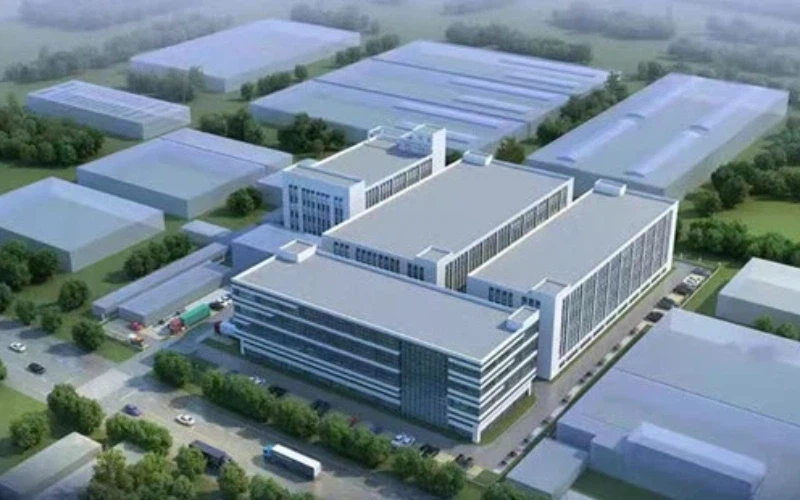


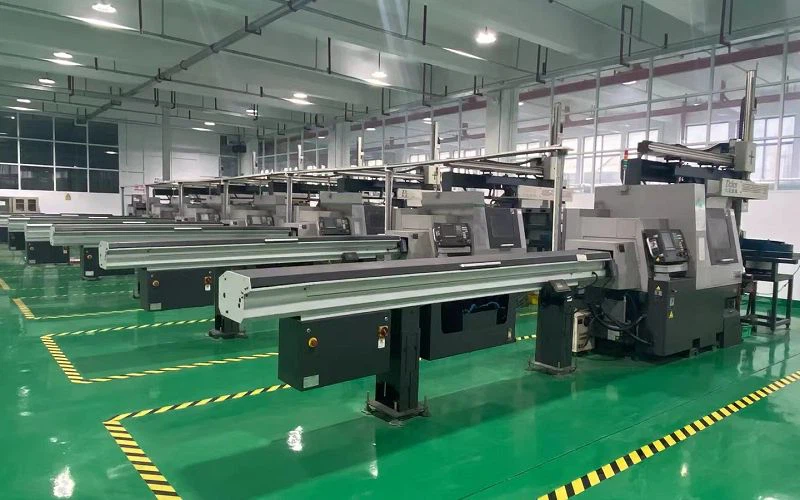


Products Equipments
Our machines are used in paper mills, corrugated paperboard factories, carton box makers, printing and packaging factories, etc.