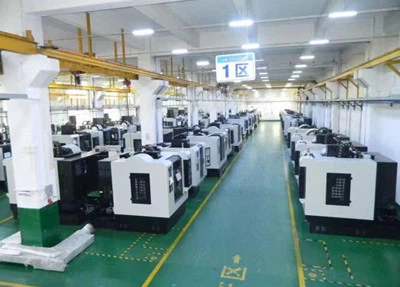
Carton Box Printing Machines
Why Choose Us
Rich experience
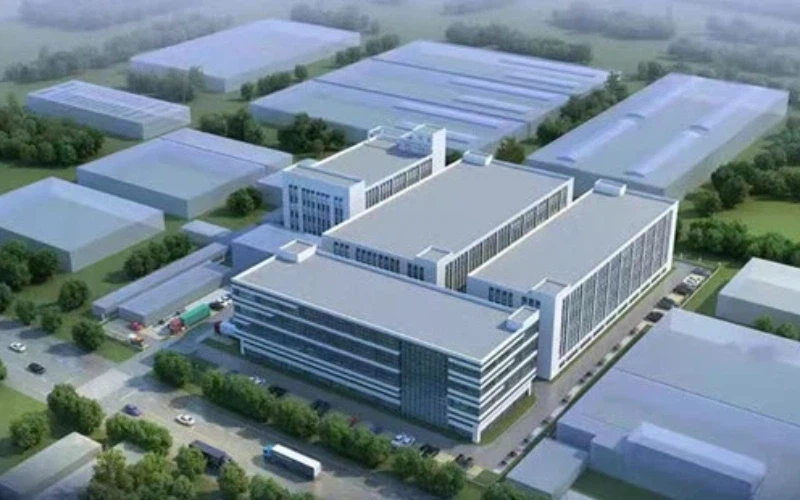
Aydly Intelligent Packaging Machinery (Guangdong) Co., Ltd. is one of the subsidiary of A.S.I. Group (American Sunflower International Group Co., Ltd.) headquartered in New York USA, Singapore and Hong Kong, China.
One-stop solution
We integrate technology research and development, manufacturing and processing, assembly, sales, export, installation and after-sales service, etc. We commit to provide a full range of solutions to the global customers of paper and paperboards related with industries of manufacturing, printing and packaging.
High quality
We specialize in carton box printing and packaging machines, corrugated paperboard production lines, laminating machines, flat bed die cutting and creasing machines, EPC with paper making machines, etc.
High quality service
Our sales staff visit the customers' plants and discuss requirements, online communication, answer questions and solve difficulties. Technicians on-site installation, regular factory tour to check the machines running and maintenance, repair and fix, global express delivery for the ordered parts, etc.
What Is a Carton Box Printing Machine
A carton box printing machine is a device designed to print text, patterns, and other information on the surface of carton boxes. It typically involves several process steps, such as plate loading, ink coating, embossing, and paper feeding. Carton box printing generally includes various types of equipment, such as single printing machines, carton printing slotting/die-cutting machines, printing slotting die-cutting machines, and automatic high-speed flexo printer-slotter rotary die-cutters that are inline with folder gluers.
-
 Flexo Top and Bottom Printer RDCWe use high-quality parts and famous brand components for our full computerized automatic Flexo TopAdd to Inquiry
 -
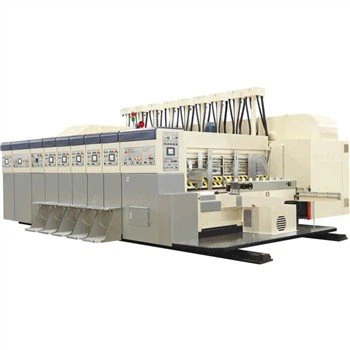 Full Computerized Flexo Printer Slotter RDCFull Computerized Flexo Printer Slotter RDC contains computer with troubleshooting, ERP, can doAdd to Inquiry
 -
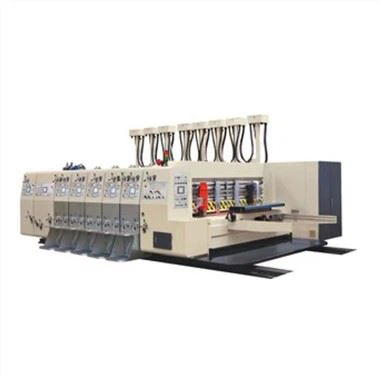 Semi Computerized Flexo Printer Slotter RDCOur Semi Computerized Flexo Printer Slotter RDC contains Integrated CNC control system,Add to Inquiry
 -
 Fixed Type Flexo Printer Slotter RDCOur Fixed type Flexo Printer Slotter RDC contains fixed printing unit machine but can open easilyAdd to Inquiry
 -
 Flexo Bottom Printer Slotter RDC StackerFlexo Bottom Printer Slotter RDC Stacker choose international brand electric components andAdd to Inquiry
 -
 Auto Pre Feeder MachineOur Auto Pre Feeder Machines are specially designed for corrugated carton box factories. WidelyAdd to Inquiry
 -
 Automatic Vibrator Stacker MachineIn our Automatic Vibrator Stacker Machine, all motors of the waste washer are independentlyAdd to Inquiry
 -
 Corrugated Digital Printer MachineOur Corrugated Digital Printer Machine adopts the latest Epson I3200(8)-A1HD industrial printhead.Add to Inquiry
 -
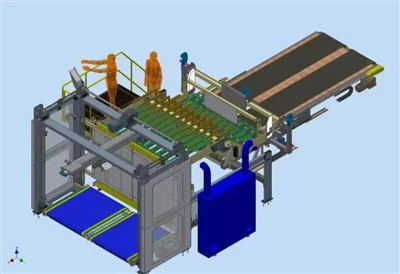 Fully Automatic Pre Feeding Machine, With Turning Over Sy...Aydly full automatic prefeeder, with turning over system is a fully automatic corrugated cardboardAdd to Inquiry


- Aydly Intelligent Packaging Machinery (Guangdong) Co., Ltd.
- Tel: +86-20-84885226
- Fax: +86-20-34714772
- Cell/WeChat: +86-13808819567
- Email: ai88pack@gmail.com AlPackMachine@163.com AYDLY_PACK@163.COM
- Add: No.15 Fuhua Road, Zhongcun, Panyu District, Guangzhou, China.
Features of Carton Box Printing Machines

01
High-Speed Operation
Carton box printing machines are designed for high-speed operation, allowing them to complete print jobs quickly and efficiently. This capability significantly increases productivity and enables businesses to fulfill large order volumes with ease.

02
Advanced Printing Technology
These machines employ advanced printing technology to deliver high-resolution prints. They ensure that every carton print meets the specific branding and quality expectations of the business.

03
Diverse Print Capabilities
Versatility is a key feature of these machines. They can print on a wide range of carton sizes and shapes, allowing businesses to produce packaging that aligns with their product range and requirements.

04
Eco-Friendly Mechanism
Carton box printing machines are designed with environmental considerations in mind. They operate with minimal waste, supporting global trends toward eco-friendly practices. This feature helps businesses move towards greener operations.
The printing cylinder, made of steel, holds the rubber printing plate. It serves as a host for the printing plate, facilitating the transfer of ink from the plate to the substrate.
Printing plates can be made of rubber or photopolymer. Rubber plates are produced by curing natural or synthetic rubber in a mold. Photopolymer plates, on the other hand, are made from light-sensitive materials. The image is developed by exposing the plate to ultraviolet light through a photographic negative. When the light hits the photopolymer plate, the image areas harden, while the non-image areas remain soft and dissolve in a developing solution. The hardened image areas remain in relief form, allowing only these areas to accept ink and transfer it to the substrate.
Another method for creating a flexo printing plate is laser engraving. A computer-controlled laser engraves the image onto the plate. These plates offer quality comparable to the gravure printing process but are less commonly used due to their high production cost.
Once the printing plate is ready, it is mounted on the printing cylinder using various mechanisms depending on the machine manufacturer. A common method involves using double-sided tape to secure the printing plate to the cylinder. After preparing the printing station, the operator adjusts the slotting and scoring sections of the machine. To form the box, the box blank must be scored in both vertical and horizontal directions. A flexo-folder-gluer is designed to score in only one direction; scoring in the other direction is done at the corrugated blank manufacturing plant. Thus, the flexo-folder-gluer receives blanks that are already scored in one direction.
In the slotter/scorer section of the machine, the blank is scored to create the four body panels of the box, slotted to form the top and bottom flaps, and a manufacturer joint to connect the box to the fourth panel. The setup of the slotter/scorer section can be manual, semi-automatic, or fully automatic. Multiple male and female scoring heads are mounted on two shafts of the flexo-folder-gluer machine in the slotting/scoring section. As the blank passes through these shafts, the scoring heads create creases or scores on the blank. The profile of the scoring heads and the pressure between the male and female scoring heads determine the quality of the score. Immediately after scoring, the blank passes through another pair of shafts equipped with male and female slotting heads. These heads trim the outside edges of the blank, create the top and bottom flaps, and form the manufacturer joint.
After printing, scoring, and slotting, the blank enters the folder-gluer section. Here, the blank is folded to secure the manufacturer joint to the box using adhesive. Folding is accomplished with adjustable folding rods and belts with steel rails. Adhesive is applied to fasten the manufacturer joint to the box, using either nozzles or a wheel glue applicator. At this stage, the corrugated box is ready in a knock-down position. The box then moves to the delivery section, where multiple knocked-down boxes are stacked and strapped together for shipment to the warehouse.

Multi-Color Printing: With multiple ink stations, these machines can apply vibrant hues and intricate designs to boxes.
High-Definition Printing: Carton box printing machines deliver sharp lines and crisp images, ensuring that every detail stands out.
Corrugated Printing: Specialized machines are designed to handle the challenges of printing on corrugated cardboard, providing durable and eye-catching results.
Die-Cutting and Creasing: In addition to printing, some machines can also perform die-cutting and creasing operations, creating boxes with precise shapes and folds.
How to Print on Corrugated Boxes: Carton Box Printing Machines
Flexographic Printing
The first option for printing on corrugated boxes is flexographic printing. This type of printing is one of the most common for corrugated boxes due to its versatility and efficiency in terms of turnaround time. But what is flexographic printing, and how does it work?
Essentially, it uses a high-quality polymer print plate on corrugated material. Plates are created with different designs for each specific color. These plates are then attached to large rotating cylinders that print the designs one after another, eventually building the complete design.
While it is useful, this type of printing is not recommended for highly intricate designs or photo-quality printing, as each color requires a separate plate. This method is suitable if you have simpler designs with a few colors and a high volume of materials that justify creating these plates for flexographic printing.
Lithographic Printing
The second option for printing on corrugated boxes is lithographic printing. This type of printing may also be referred to as offset printing or litho-lamination. It follows a process similar to flexographic printing but with a few key differences.
Like flexographic printing, lithographic printing involves creating different plates for each color in the design. However, lithographic printing uses a special plate that repels ink from certain areas meant to be left blank. This ensures that the final product has clean, crisp lines rather than random blotches of ink that may transfer from other plates.
Typically, lithographic printing is done on litho labels, which are then glued to the surface of the corrugated board. It is also possible to use lithographic printing on a smaller label alongside flexographic printing.
However, lithographic printing tends to be more expensive. Like flexographic printing, you will need to pay for the plates, so if your design changes or you are not producing at extremely high volumes, this may not be the best choice.
Digital Printing
The third option for printing on corrugated boxes is digital printing. This method is affordable, effective, and suitable for almost everyone's needs.
Digital printing offers several advantages. Unlike flexographic and lithographic printing methods, it does not require expensive and rigid plates. This makes digital printing ideal for short runs or test packaging since it is fast, easy to set up, and maintains a high-quality appearance. Despite its low cost, it is also viable for large-scale or long-term projects.
Digital printing allows for experimentation with designs and personalization of your boxes for specific customers, which can be beneficial in the long run. The flexibility offered by digital printing enables you to try different styles and designs without worrying about wasting time or resources.
Parts of a Carton Box Printing Machine
The major components of such a machine typically include:
Feeding Section
This is where the corrugated cardboard sheets or boxes are fed into the machine for printing. It consists of mechanisms designed to ensure the smooth and accurate feeding of the substrate.
Printing Units
These units are responsible for applying ink to the corrugated cardboard. Each printing unit typically includes a plate cylinder, an anilox roller for transferring ink, and a rubber or elastomer impression roller for transferring ink from the anilox roller to the substrate. Modern machines may have multiple printing units to enable multi-color printing.
Anilox Roller
The anilox roller is covered with a pattern of tiny cells that hold and transfer a controlled amount of ink to the printing plates. The cell pattern and density determine the amount of ink transferred to the substrate, affecting print quality and consistency.
Anilox Roller
The anilox roller is covered with a pattern of tiny cells that hold and transfer a controlled amount of ink to the printing plates. The cell pattern and density determine the amount of ink transferred to the substrate, affecting print quality and consistency.
Impression Roller
The impression roller transfers ink from the printing plate to the corrugated cardboard. It applies even pressure to ensure consistent printing results.
Drying Section
After the ink is applied to the substrate, it needs to be dried before further processing. Drying can be achieved using various methods, such as hot air or infrared drying systems.
Die-Cutting Unit
In some corrugated box printing machines, there may be an integrated die-cutting unit. This unit cuts out the printed and corrugated sheets into the desired box shapes. It is particularly useful for inline production where printing and cutting occur in one continuous process.
Stacking and Collecting Section
After printing and any subsequent processing steps (such as die-cutting), the printed corrugated sheets or boxes are collected and stacked for further packaging and distribution.
Control Panel
The machine is controlled through a central control panel where operators can set various parameters such as printing speed, ink flow, and drying temperature. Modern machines might even have digital interfaces for easier control and monitoring.
Ink and Color Management System
This includes ink reservoirs, ink supply systems, and color management tools to ensure consistent and accurate color reproduction across print runs.
Aydly Intelligent Packaging Machinery (Guangdong) Co., Ltd. is one of the subsidiary of A.S.I. Group (American Sunflower International Group Co., Ltd.) headquartered in New York USA, Singapore and Hong Kong, China. We specialize in carton box printing and packaging machines, corrugated paperboard production lines, laminating machines, flat bed die cutting and creasing machines, EPC with paper making machines, etc.
We integrate technology research and development, manufacturing and processing, assembly, sales, export, installation and after-sales service, etc. We commit to provide a full range of solutions to the global customers of paper and paperboards related with industries of manufacturing, printing and packaging.




Products Equipments
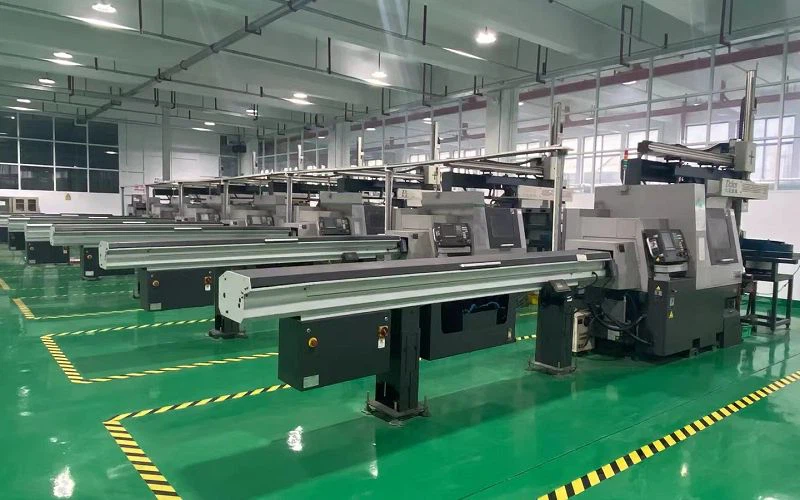
Our machines are used in paper mills, corrugated paperboard factories, carton box makers, printing and packaging factories, etc.